I’m going to explain why one scene that they chose to remove actually puts the whole movie in perspective and answers a lot of questions fans had about the final cut.
Obviously this is definitely going to spoil you and I can list about 100 different trigger warnings so unless you have seen the movie and are prepared to deal with the same themes, don’t read on.
Cancer World Tour
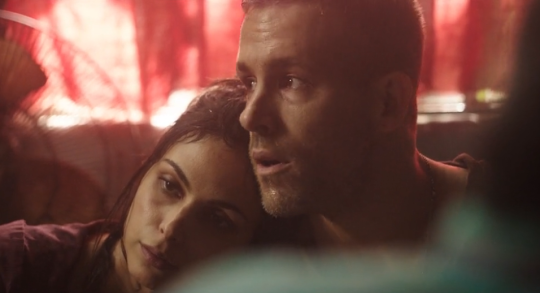
We see in what makes the final cut of the film that Vanessa is desperate to find a cure for Wade’s cancer and in the edited scene called “Cancer World Tour” she does just as he predicts, drags him around the world trying every cure.
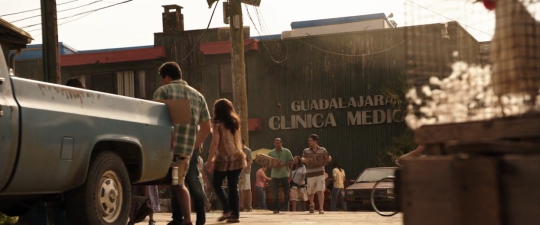
As always Wade narrates the scene so he informs us that they have been all of the world and have already tried everything and now they were at rock bottom, in a very unlikely clinic in Guadalajara Mexico.
Wade has given up long ago but is keeping that to himself, spending the rest of his very short life indulging Vanessa in the fantasy that he can be cured.
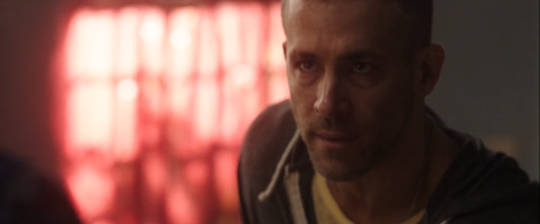
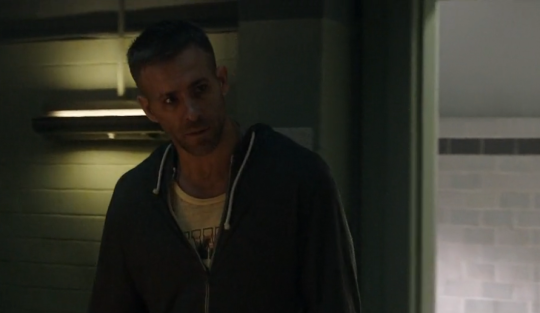
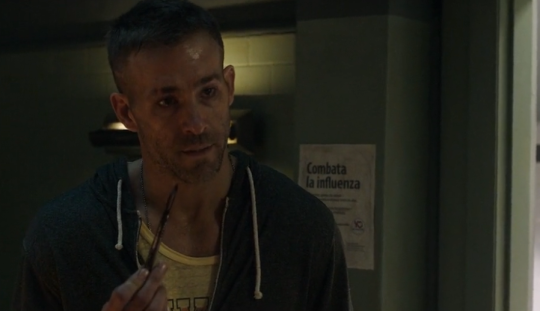
He is in a waiting room bitterly observing the other hopeless patients indulging their own love ones, or perhaps even themselves, and he visibly has a hard time keeping his anger and sadness to himself.
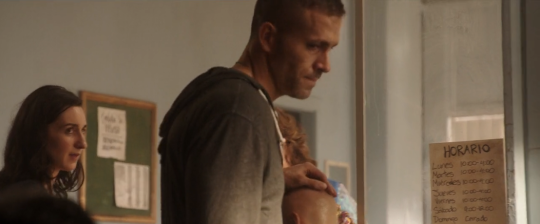
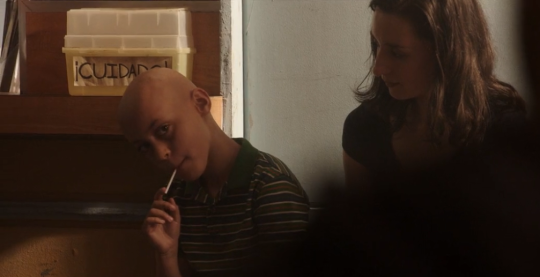
Wade listens in as a mother tries to pay for her young son’s treatment and the nurse very coldly insists she won’t take any pesos, everything has to be in American cash. The little boy reaches for a sucker and the nurse says it will cost extra. Wade quickly puts his own cash on the desk, saying it’s on him.
Something is still bothering him. Wade watches the young boy sit as an older gentleman Wade himself was talking to earlier gets up to go in for his own appointment. Wade tells us in a voice over how he is at the end of his rope. He will indulge Vanessa, he will spend all the money that is needed to do so, but he can’t watch more of these innocent people being screwed over.
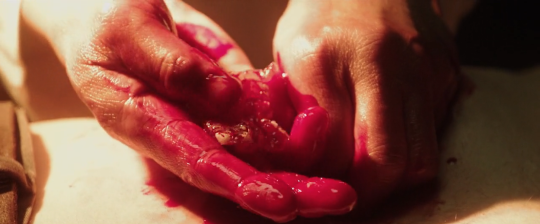
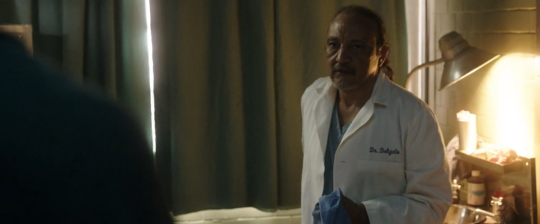
Wade sneaks into the operating room to observe that what is going on is that this miracle cure is not a miracle nor a cure. I don’t know exactly how much a layperson may understand this particular treatment by what they filmed so I’m going to explain in a bit more detail: this is an actual treatment that is offered for a great amount of money and the practitioner promises that they will remove your cancer without putting you under anesthesia or even cutting you open; they will somehow reach in and pull it out of you. The stomach is pressed upon by the practitioner and with sleight-of-hand they produced a bit of animal organ, presenting it as the removed cancer. There is a bit of blood but no incision, they claim to have healed that as well.
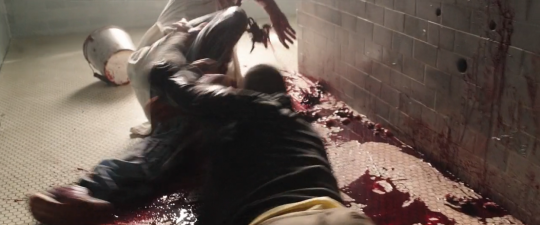
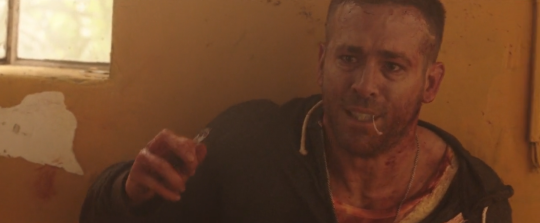
Wade waits secretly as the the older gentleman, relieved to have been cured, leaves the room and then he enters to confront the practitioner. Wade dryly remarks that the bucket of removed tumors smells like chicken, the practitioner reaches for a scalpel to defend himself, Wade has already taken it.
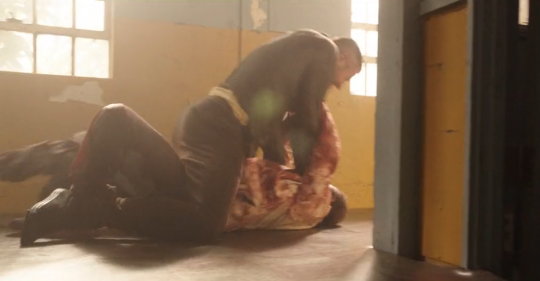
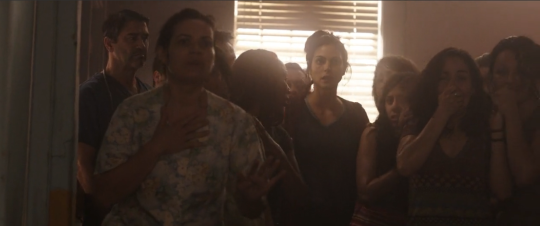
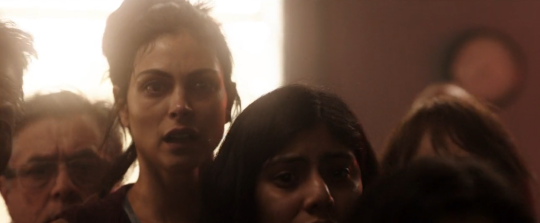
Wade loses it. He viciously beats and stabs the man. No fancy choreography, no clever banter. Wade gruesomely murders this man with his own two hands and blood is everywhere. The staff and waiting room rush in to see what is happened and Vanessa is among them.
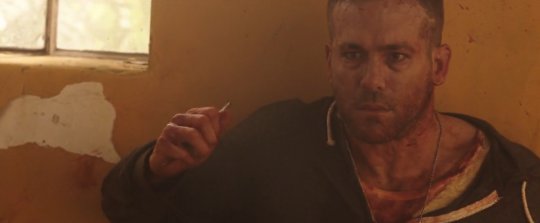
Wade, in excruciating emotional pain, realizes what has happened. Vanessa is watching. This wasn’t a job and it wasn’t done efficiently. He isn’t being a mercenary, he’s being a murderer, is becoming what we will call Deadpool.
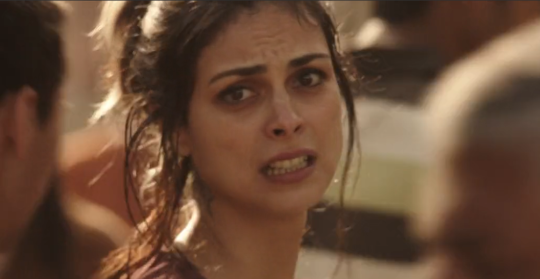
Fleeing, Wade runs away and leaves Vanessa to desperately scream in search for him to no avail. He is gone.
I don’t know why this scene wouldn’t of been included in the final cut. To me it solves a lot of issues that people have had with the characterization of both Wade and Vanessa.
Many reviewers asked why, despite the fact that Wade obviously was upset and beginning to show signs of mental illness, he couldn’t just go back to Vanessa and let her see his scars. She certainly didn’t come off as the type of character who would judge him for the way he looked but that wasn’t it. Wade is reluctant to show her what he looks like now, of course, but most of the reluctance comes from the fact that she has already seen a little bit of what he has become inside and that’s a completely different story. Vanessa fell in love with a different man, a man who killed people but wasn’t violent, wasn’t unhinged.
Maybe more importantly it gives the ending an entirely different tone. It’s not the happy ending it appears. Vanessa forgives Wade and despite his warning she is in Deadpool’s arms, not really understanding that Wade is gone. Deadpool very canonically gives into the bit of hope that it might be okay, someone might actually love him.
But what happens next? Vanessa is now going to meet Deadpool and realize that she has to again mourn the loss of Wade who she believes has come back from the dead. Will she love this new man? Should she? Is she safe to be with him?
Your feelings for Deadpool aside, try to imagine what Vanessa is walking into. Wade would never hurt her but Deadpool is not Wade and sometimes Deadpool is not even Deadpool. Sometimes this body is overtaken with pain and hallucinations. If Wade can viciously beat and stab a man to death when he disassociates, what does Deadpool do when he disassociates?
Deadpool doesn’t know.
Man.. I really wish they wouldn’t have cut this scene and the way OP explains/describes basically the ‘birth’ of Deadpool is perfect. Deleted scene here for those interested.
This scene interests me on a lot of levels. (The most superficial being that I love seeing men terrified and crawling on the ground, so, win there)
But this scene is funny to me because Newt does the classic thing that people (mostly women) do in horror movies, where they break a heel or fall over or something when running from a monster, and instead of getting back up and sprinting, they do this. I think it’s always a ridiculous trope, because survival instincts take over in a situation like this and really you’d get up and sprint. But what if there’s a reason for it here?
In the novelization, it’s explicit when Newt meets Otachi that he’s still ghost-drifting with her, still partially thinking with/for/like her. What if the same thing is going on here? What if the reason he doesn’t even appear to trip so much as throw himself down onto the ground and then crawl around like this is because that’s how Baby Otachi moves? You’ll notice in that first gif that Newt goes down at exactly the same time as Baby Otachi does, and then his crawling on all fours closely echoes what the kaiju is doing behind him.
When he turns over in the final gif, it’s like an assertion of some part of him through the foreign impulses in his brain—he may be down and crawling like the monster, but he’s at least going to look at it and see that it’s not him.
So of course given one of the marketing industry’s most extensive media measurement services, the first thing I do is look up fandom stats.
In a month 35.5% of people who visited archiveofourown visited fanfiction.net 30.6% of people who visited fanficion.net visited archiveofourown I was surprised at how little overlap there was
The average age of both sites visitors is 33
The average income for both sites visitors is about 90k
People repeatedly visited fanfiction.net. The average number of visits there per visitor in a month was 13, whereas the average number for ao3 was 8.
Visitors stayed at fanfiction.net for two and a half hours per month, almost twice as much as ao3
Fanfiction.net is also more popular than ao3 at 130,000 visitors per month vs 96,000
Ao3 has more gay visitors at 6% (vs ff.net’s 4%) but both have the same amount of bisexual visitors.
The only notable geographic trends are at ff.net, which is much more likely to be used by people in new england and much less likely to be used in the pacific
Visitors of both sites are about two and a half times more likely to be college students than the average internet user.
Also, only 2.8% of tumblr users visit ao3 in the same month. But almost half of ao3 users are on tumblr.
Anyways, here’s some graphs that show them compared
And here’s some just for ao3
If anyone has any questions about this or wants me to look something related up, they can let me know.
I asked the OP where this data came from, and they said, “They use a panel of about a million people who agree to have their data recorded and the anonymized.” participants are not completely randomly selected, but it seems likely to be much more representative of the overall digital population (or maybe just the US?) than most participant groups for surveys spread by word of mouth.
Very interesting how different some of the demographics here are from some fandom surveys I’ve seen! This likely captures a lot more of the lurkers and folks not active in the same fan communities where those surveys circulate. I’d love to dig into even more data here. XD
A couple quick thoughts on OP’s observations… I’m not sure average age and income make so much sense here (especially if you’re using the mean), when you view the overall distributions. It looks like a whole lot of users are 18-24, and then there’s a long tail. And it looks like income is a bit of a U-shape… Many users are either in the lowest or highest income buckets used here. (Makes sense that a lot of folks wouldn’t be making much when so many are young.)
I am fascinated that the average Ao3 user only visits 8 times per month lol. I am Fandom Georg apparently
yeah what the fuck i’m on there every day
ok but who are the numerous 55-65 yr old men (probably) making over 100k?
that’s the demographic that fascinates me like all the other stuff is like ok we assumed it but that???
evidence that ancient paleolithic venus statues were made by women who were examining their own bodies and sculpting them from their own point of view, not, as previously assumed, exaggerated features from an outside perspective
tony stark as a person: fun. great. interesting take on a character. love his interpersonal drama, love the issues he represents. can truly relate to a lot of his mental illness issues and his difficulties relating to people.
tony stark as a corporation, an ideology: Uncomfortable Reminders of our Current US President, the ills of rampant capitalism, and the increasing likelihood of a police state
I think one of my favorite headcanons for Erik is that he quite literally has no lips.
Because in the book, Christine claims that Erik has no lips:
“He came up close and I heard his teeth grind for his mouth had no lips!” – The Phantom of the Opera, a New Translation By David Coward.
I don’t even think this is a turn of phrase for thin lips. I’m thinking he literally didn’t have any, his teeth exposed at all times underneath his mask
So imagine Erik, with a beautiful, otherworldly singing and speaking voice, with no lips. He’d have to have learned how to speak and sing using ventriloquism techniques from a young age. Imagine Erik being unmasked, and in rage and hysteria forgetting how to speak:
“I sank to my knees while, in a voice full of hate, he hissed deranged words and incoherent phrases, he cursed and raved wildly…” The Phantom of the Opera, A New Translation by David Coward
So just…Erik with no lips.
This headcanon, I like it, another!
“My mother never would let me kiss her…she would run away, sobbing, and throw my mask at me… I can’t say I blame her.”
I’m still way okay with this, that’s been my thought too!! The ventriloquism being almost a necessity for him to even communicate, and then he just took it to so many other vocal levels. And all from a place originating in his deformity. YES.
Of course, some people will look at this parallel and say, “oh, Moftiss are bad writers because they are tonally inconsistent. They can’t decide if violence is funny or serious.” But I think the contrast was totally deliberate on their part. This is precisely the point they are making: not only is John Watson repeatedly inclined toward violence, but we are all implicated by it.
This is, in fact, the story they’ve been telling since the beginning, which I talked about in my meta, How I Learned to Stop Worrying and Love Season 3. From the first episode, we were meant to read John as an Everyman, as relatable, as a basically good guy who is “like us”, compared to inscrutable, morally questionable geniuses like Sherlock, Mycroft, Moriarty, and Adler.
HLV and S4 then deliberately undermined that reading, not just by showing us that John has a dark side, but that we always knew his dark side, but we laughed about it or brushed it off or considered it charming that he killed a man in the first episode and giggled about it. It’s not just that John has a dark side – it’s that anyone who chooses to watch (or write) a show like Sherlock has a bit of darkness in them too.
It’s particularly telling that John’s line I quoted above – “We did
see it coming. We always saw it coming. But it was fun.”
– is meant to be about Sherlock, when really it better describes himself.
Agree. And I think that line is so callous as applied to Sherlock.
John bothers me, because I feel like he is so unconscious. He’s so needy and angry and seems to willfully refuse to know himself. He’s just… SO MUCH pressed masculinity, which is a thing I have little patience for these days. I always feel like Sherlock is much less of an arsehole than he seems, and John is much more of one.
For me, what makes John Watson compelling, and even sympathetic is his anger.
I didn’t find it fun to watch him beat the shit out of Sherlock in season 3 or 4. I was honestly more upset at the fact that it was treated as silly in season 3. I saw John’s pain being treated lightly, and I saw him react to that with violence.
I’m not sure we know how to deal with anger and violence. Is it stupid and cartoonish? Is it serious and unforgivable? Is it dark or is it light?
I also don’t think that John is repressed because of his masculinity, although that may play into it. I think he recognizes that what is inside him is genuinely very bad. I think he knows what he is capable of and how badly he can hurt others.
In season 4 I saw a man who understands that he is not in a good place, who puts his daughter where she won’t be harmed by him. Then Sherlock comes to him and he might as well be holding a gun to John for all the power John has to walk away. Sherlock pushes every button he knows of to trigger John’s protectiveness (because for every dark impulse in John there is an equal impulse to help). He forces John to engage with him by putting himself in danger and making John responsible for his safety. And when it becomes clear to John that the danger to Sherlock is coming from Sherlock, he snaps.
And the dam breaks and all of his anger and rage over Sherlock’s cavalier attitude toward all of the things John holds as precious, including, of course, Sherlock’s own damn self is let out.
And all that’s left is John and his knowledge that he is exactly as vile as he fears he is.
And honestly, despite what this probably says about me, my heart absolutely ached for him.
I loved reading this, and I agree! I get what you’re saying and I understand.
I feel like he deserves sympathy, and I feel like it’s sometimes difficult for me to find it. I love what you say here, and it makes me wish I felt it more. It would be kinder of me to be more sympathetic about John. But… I just really find him difficult.


 Avelera